PLEASE NOTE: Workshops are open to the public.
Any non-member can join WAA and take advantage of savings for the cost of workshop. Class sizes may be limited. *
The First Wednesday Paint-In Class Demos are conducted for Members only, taking place during the Paint-in. The members may take advantage of the short class or not.
For more information, either for a class or workshop, please contact: Susan Barnard at susanebarnard@gmail.com
Forms for Workshop Presenters link
*Tuition is fully refundable up to 7 days before the workshop start date.
Waterway Art Association reserves the right to cancel any class that does not meet minimum attendance requirements. All payments will be refunded if the class is cancelled by the organization.
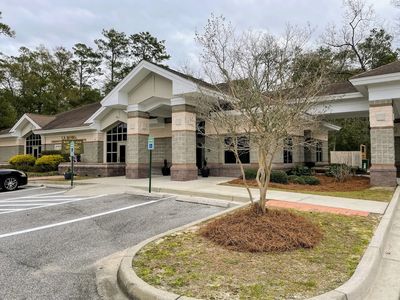
C B Berry Location
2250 Hwy 179, Little River, SC 29566
843-249-4157
Every first Wednesday, members can take advantage of 20-minute demonstrations from other members with experience in various styles and mediums. These are presented during and in the same room as the Paint-Ins, and are free for members to participate!
If you have a creative technique or art related information you would like to share in class, contact Diane White at diane.white257@gmail.com


10am-4pm
What we will cover in this workshop are elements
your painting should display -
The four basic attributes of Line, Tone, Color, & Edges.
Your painting should also exhibit proper Form, Depth, & Light,
-it will then convey a sense of Time, Space, Mood, & Story.
Paints (tubes)
Oils, Water-Mixable Oils or Acrylics-
Burnt Umber
Burnt Sienna
Yellow Ochre
Titanium White
Cadmium Yellow
Paynes Gray
Quinacridone Magenta
Ultramarine Blue
Cobalt Teal or Turquoise
Phthalo Turquoise or Phthalo Green
Transparents (highly recommended)
Transparent White
Transparent Yellow Oxide or Quinacridone Gold
Transparent Red Oxide
All colors should be available from Jerry's or
other online art materials suppliers.
(Your favorite brands are acceptable)
-My go to's for oils are Lukas 1862 Professional Oils,
Schminke Norma Oils, and Daniel Smith Oils
-For Water-Soluable oils, Lukas Berlin Artist Water
Mixable Oils
-For Acrylics, Golden Open or Heavy Bodied acrylics and Lukas Cryl Pastos heavy bodied acrylics
Paint Brushes
3/8" or 1/2" Dagger (hog bristle or Synthetic)
1/4" Dagger
#4 and #8 Filberts (bristle or synthetic)
#10 or #8 Flat
#4 Bristle fan
#0, 1, 2 synthetic pointed rounds for details
Please bring brushes as listed or as close as possible. I will
have some daggers and mops availablefor purchase in class.
MediumsFor Oils:
ESSENTIAL!!
Winsor and Newton Liquin Original
Winsor and Newton Liquin Impasto
Winsor and Newton Liquin Fine Detail
(Other favorite brands are acceptable)
ODOR-FREE mineral spirits or similar for cleaning
For Acrylics:
Liquitex Professional Slow-Dri Blending Medium
Golden Heavy Body Gel medium (gloss or matte)
CANVAS SIZE,-
-Also, what will be covered on each day
(Please download the canvas prep for description)
18" X 24" X 1.5" or larger pre-gessoed stretched canvas
Other: bring an easel (floor or table) if you can
- your palette, complete with either a cover or plastic wrap
- a small palette knife if desired
- a sealable container for mineral spirits or a container for water
- Rags or paper towels/baby wipes are also helpful

9:30-3:30
Rendering Expressive Drawings With Donna Moore
Drawing is art's most basic and fundamental form of recording observation.
It can relay imagined visions, lay plans for other mediums, or be a complete and finished work in itself.
In this Workshop, we will:
We will go over The Value Scales in different dry mediums, mark making experimentation, the eraser in add/subtract method, avoiding outline to maximize illusion of volume and form.
Gesture and contour, mapping out placement, measuring relationships, completing a dynamic composition, exploring resources. We will work from both studio still lives and printed images. The instructor will have a variety of drawing materials available for experimentation.

9:30-12:30
HAVE FUN CREATING YOUR ONE OF A KIND UNIQUE, COLORFUL COLD WAX PAINTING!
We will be painting in layers with acrylic & cold wax on 8x8 prepared canvas panel boards.
I will instruct the technique of a gentle touch and layering to create a beautiful, textured and colorful creation.
Using paint spreaders and palette knives, we will achieve a loose somewhat abstracted appearance from your reference photo. This allows for a unique one of a kind painting.

9:30-3:30
We will begin with thirty minutes or so of classroom discussion and demonstration, followed by outdoor painting. We will go from the best method to start and explain the following subjects :
-Arranging a simple palette
-Composing the panel based on major shapes
-Using an imprimatura or toned canvas
-Wipe out / underpainting
-“Oiling out” explained

9:30am to 3:30pm
Taking an 8 x 10 photo and transferring the scene to a larger paint surface. Making the piece relatively proportional to the original. We will be using our subject and our eye to create a visually interesting art piece. I suggest that you bring some varying size paint surfaces to try and apply this practice. If possible, once the work has been transposed and drafted, you could proceed with the underpainting process preparing the canvas for your colors and creativity!

9:30am to 12:30pm
In this hands-on workshop, participants will learn how to create visual depth using layered techniques with acrylic paint and water-soluble media. Through guided instruction, they’ll explore six key methods - resist, dark over light, light over dark, glazing, combining transparent and opaque layers, and stencil-based mark-making.
The final product will be a personalized sample book, with each page showcasing a different technique in 3–4 distinct layers, serving as a lasting reference for future painting projects.

9:30am to 3:30pm
Have you been wanting to explore this innovative way to use oil paint and cold wax? Join me for an introductory workshop where you will experiment with this expressive and inspiring medium in an encouraging environment.
Create both abstract seascapes and landscapes while you learn about composition, color and of the many ways to use various tools to apply the paint and create unique finishes.
No prior artistic experience needed! You will be able to leave the workshop with at least two completed paintings and a love of cold wax! and perhaps some new friends and ideas!
Feel free to bring a snack and or drink.
Oil paints -- Bring the oil paint that you use.
I WILL HAVE SOME OIL PAINTS FOR YOUR USE. If this is your first time with oils - buying the top of the line brand is not necessary. It is good to have a warm and a cool of each color.
These are the colors that I use:
What will be provided: Gamblin Cold Wax Some oil paints

Wednesdays, Thursday January 21,22,28, 2026
10am-4 pm
Workshop Overview: Painting Clear,
Reflective & Refractive Water
3-Day Intensive Workshop
Instructor: Sabine Baeckmann-Murray
Water is never just water. It is a living mirror—responding to everything above, below, and
around it. In this immersive two-day workshop, artists will learn how to truly see water in all its
complexity and translate that understanding into convincing, luminous paintings.
Participants will discover why painting clear water is less about the water itself and more
about interpreting the elements that define it—light, depth, color, surface movement, and
reflection. Reference photos become starting points rather than strict instructions; artists will
learn how to make intentional creative adjustments to strengthen their compositions and
achieve greater realism or expressive effect.
PRE-WORKSHOP CANVAS PREP (18”X24” MIN)
Please prepare your canvas with a light burnt sienna
wash BEFORE coming to the workshop. Mix some burnt
sienna paint with enough mineral spirits, or a 50/ 50
medium/ water mix for acrylics, to make a thin wash.
Cover the front and all sides of the canvas, then use a
rag to rub the wash into the canvas and wipe off any
excess wash. Canvas should be dry to the touch within
an hour or so.
DAY ONE – What’s Beneath: Topography, Color & Refraction
Stage 1: Topography – The Underwater Landscape
We begin by examining what sits beneath the surface: rocks, sand, vegetation, and their shapes,
textures, and values—what you would see if the water were drained away.
Color Through Water
Participants will learn how submerged elements shift when water is added back in—how sky color,
depth, angle, and clarity transform the true colors beneath.
Refraction & the Body of Water
Using the mental exercise of “pouring the water into a glass,” we explore:
• What is the actual color of the water?
• How does refractive index (≈1.33 and variable with temperature) affect what we see?
• How do objects bend, distort, or shift under the surface?
This day builds the essential foundation: what’s under the water determines much of what appears
above it.
DAY TWO – What’s Above: Reflection & Surface Behavior
Stage 2: Reflection – Sky, Light & Overhead Elements
We explore how the world above the water influences what’s seen on its surface:
• How reflections form
• How moving vs. still water alters shapes
• How to interpret angles, lighting, distortions, and shadowing
Atmospheric Note: Clouds in Reflection (Brief Introduction)
Because clouds affect water’s reflected color and value, we introduce:
• Recognizing distant vs. close clouds
• Simple cloud shapes and light direction
• How cloud color is determined by atmosphere, humidity, and sun angle
• Translating cloud shapes and colors into believable water reflections
(This is only a preview—full cloud instruction happens on Day Three.)
Stage 3: The Water’s Surface – Texture, Motion & Tonal Strength
Artists learn to paint:
• Smooth/glassy water
• Ripples, waves, and subtle motion
• How surface texture affects what is visible below or reflected above
• How to intensify saturation, deepen shadows, and heighten highlights as elements move into
the foreground
DAY THREE – The Sky Above: Clouds, Weather & Atmospheric Color
This day is dedicated entirely to painting clouds and atmospheric conditions — one of the most
important influences on the look of water. He (e are some topics we will touch on:
Cloud Structure & Anatomy
We break clouds down into clear, paintable components:
• Light source and highlight planes
• Core shadows
• Soft vs. hard edges
• Depth, layering, and vapor density
• When clouds “sit on” the horizon vs. float overhead
Distance, Scale & Perspective
Artists learn to determine — and paint — cloud distance using:
• Edge sharpness
• Color shifts
• Value compression
• Overlapping forms
• Atmospheric perspective
Cloud Color & Light Behavior
We explore why clouds are never simply “white”:
• How atmosphere scatters color
• Temperature and humidity effects
• Sun angle and time-of-day influence
• Painting warm, cool, luminous, or muted clouds
• Translating cloud color into water reflection accurately
Weather & Special Atmospheric Conditions
We cover how to paint:
• Sunset and sunrise clouds (warm glow, reflective color bands, transitional gradients)
• Storm clouds (density, darkness, active edges, dramatic contrast)
• Rain clouds (soft bases, curtain effects, haze)
• Fog and mist (diffusion, lost edges, reduced contrast)
• Post-storm light (silver linings, broken light shafts, vivid reflections)
Clouds + Water: Putting It All Together
We finish by combining atmospheric concepts with reflection logic to create paintings
that feel cohesive, luminous, and believable.
Paints (tubes)
Oils, Water-Mixable Oils or Acrylics
Burnt Umber
Burnt Sienna
Yellow Ochre
Titanium White
Cadmium Yellow
Paynes Gray
Quinacridone Magenta
Ultramarine Blue
Cobalt Teal or Turquoise
Sap Green and/or Phthalo Green
Transparents (highly recommended)
Transparent White
Transparent Yellow Oxide or Quinacridone Gold
Transparent Red Oxide
All colors should be avatfable from Jerry's or
other online art materials suppliers.
(Your favorite brands are acceptable)
-My 'go to' for oils are Lukas 1862 Professional Oils,
Schminke Nonna Oils, and Daniel Smith Oils
-For Water-Soluable oils, I
Mixable Oils
-For Ac1ylics, Golden Open or Heavy Bodied ac1ylics and Lukas C1yl Pastas heavy bodied ac1ylics
Paint Brushes
3/8" or rh" Dagger (hog bristle or Syntl1etic)
r/ 4" Dagger
#4 and #8 Filberts (bristle or syntl1etic)
#ro or #8 Flat
# 4 Bristle fan
#o, r, 2 syntl1etic pointed rounds for details
Mediums- ESSENTIAL!!
For Oils:
Winsor and Newton Liquin Original
Winsor and Newton Liquin Impasto
Winsor and Newton Liquin Fine Detail
(Otl1er favorite brands are acceptable)
ODOR-FREE mineral spirits or similar for cleaning
For Acrylics:
Liquitex Professional Slow-Dri Blending Medium
Golden Heavy Body Gel medium (gloss or matte)
(Other favorite brands are acceptable)
Canvas
18"x24"x1.5" or larger pre-gessoed stretched canvas
- easel (floor or table)
- your palette complete with eitl1er a cover or plastic wrap
- a small palette knife if desired
- a sealable container for mineral spirits or a container for water
- rags or paper towels/baby wipes are also helpful
(See write up on Canvas Prep in Supply Area below.)
Painting Waves SupplyListDirections (pdf)
DownloadWaves Canvas Prep and 2 day Curriculum (pdf)
DownloadDrawing Class Donna Moore Supply List for (pdf)
DownloadAcrylic Cold-wax Gwen Pikul Supply list (pdf)
DownloadClay Johnson Plien Air Supply List (pdf)
DownloadCreating Depth with Layers with Mary Beth Bradbury (pdf)
DownloadAbout Clay Johnson (pdf)
DownloadClay's Suggestions for Plein Air (pdf)
DownloadJack Hurley Workshop Supply List (pdf)
DownloadOil Cold Wax Jane Wolfgang supply list (pdf)
DownloadOil Cold Wax Jane Wolfgang (pdf)
DownloadPainting Clear,Reflective Water/Clouds Canvas Prep (pdf)
DownloadClear,Reflective,RefractiveWater Workshop (pdf)
DownloadTransparent,Reflect_RefractWaterSupplyList (pdf)
DownloadWaterway Art Association
MAILING ADDRESS: 9869 Ocean Highway West, Suite 3, PMB 182Carolina Shores, NC, USA
Copyright © 2025 Waterway Art Association - All Rights Reserved.
We use cookies to analyze website traffic and optimize your website experience. By accepting our use of cookies, your data will be aggregated with all other user data.